For Australian landowners, choosing the right rural & farm sheds is one of the most important infrastructure decisions you’ll make. Whether you’re storing expensive machinery, protecting hay from the elements, sheltering livestock, or setting up a dedicated workshop, the size and design of your shed directly impact efficiency, safety, and long-term costs.
At Professional Choice Sheds, we specialise in custom-designed rural and farm sheds built to withstand tough Australian conditions. Whether you need a high-clearance machinery shed, a hay storage solution, or a multi-purpose farm building, Professional Choice Sheds can design and engineer the perfect solution for your property. Contact Professional Choice Sheds today to request a quote or book a consultation — and build a shed that works as hard as you do.
Why Size Matters for Rural & Farm Sheds
Assessing Your Storage & Operational Needs
Start by listing exactly what the shed will be used for:
- Tractors, headers, and harvesters
- Hay or grain storage
- Livestock shelter
- Workshop and maintenance areas
- Feed and chemical storage
Each use has different space requirements. For example, hay storage often requires high roof clearance and strong ventilation, while machinery sheds need wide access bays and durable flooring.
Machinery & Equipment Clearance Requirements
Modern agricultural machinery is larger than ever. Typical clearance considerations include:
- Tractor height: 3–4 metres
- Combine harvesters: 4–5 metres
- Wide booms and attachments
A common mistake is building too low. Ideally, allow at least 500mm to 1 metre of additional clearance above your tallest equipment. Door width is equally important — 4–6 metre wide openings are common for larger machinery.
Planning for Future Expansion
Farms grow, and so should your infrastructure planning. Consider:
- Adding extra bays later
- Extending shed length
- Increasing storage capacity
Designing with expansion in mind reduces long-term costs. Multi-bay sheds allow flexible storage and easier upgrades.
Height, Width & Bay Spacing Considerations
- Height: Critical for stacking hay or accommodating tall machinery
- Width: Large-span sheds (15m–30m+) reduce the need for internal posts
- Bay spacing: Standard bays are often 3m–6m apart
Wider clear-span structures maximise usable floor space and improve vehicle movement inside the shed.
Popular Farm Shed Designs in Australia
Different properties require different designs. Here are the most popular options:
Gable Roof Sheds
Best for: General farm storage, machinery, workshops
Gable roof sheds are the most common rural shed design. Their symmetrical roof allows excellent water runoff and natural ventilation. They’re ideal for:
- Large machinery storage
- Multi-purpose farm sheds
- Hay storage
The pitched design also allows solar panel installation if required.
Skillion Roof Sheds
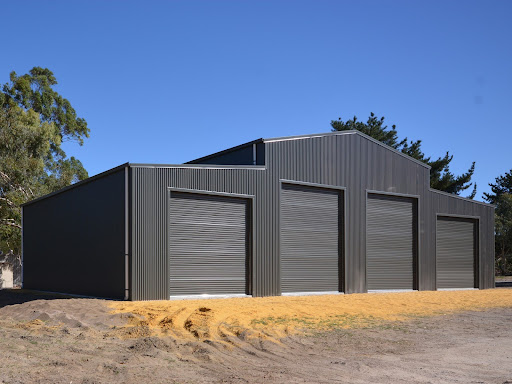
Best for: Modern rural properties, cost-effective builds
Skillion sheds feature a single sloping roof. They are:
- Cost-effective
- Simple in design
- Ideal for attaching to existing buildings
They work well for smaller machinery storage and side extensions.
Barn-Style Sheds
Best for: High-clearance storage, multi-level use
Barn-style sheds provide extra height in the centre, making them perfect for:
- Tall equipment
- Mezzanine floors
- Hay lofts
They also offer a classic rural aesthetic while delivering practical storage benefits.
Open-Front & Lean-To Sheds
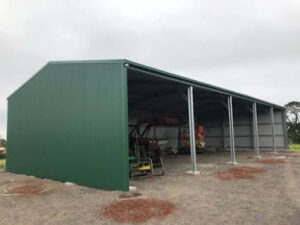
Best for: Quick-access machinery & livestock shelter
Open-front sheds provide easy access and airflow, making them ideal for:
- Livestock shelter
- Frequently used machinery
- Feed storage
Lean-to designs are excellent for expanding existing structures without major structural changes.
Enclosed vs. Partially Open Designs
- Fully enclosed: Best for grain, tools, and security
- Partially open: Better ventilation and easier access
- Combination layouts: Enclosed workshop + open machinery bay
The right choice depends on climate, theft risk, and storage type.
Climate & Location Considerations
Australian conditions vary dramatically. Your shed must be engineered accordingly.
Wind Ratings & Structural Strength
Sheds should meet Australian wind region requirements. Coastal and cyclone-prone areas require higher-rated structural systems.
Cyclone-Rated Sheds
In northern regions, cyclone-rated designs are essential. These include reinforced connections and stronger footing systems.
Rainfall Runoff & Roof Pitch
High rainfall areas benefit from steeper roof pitches and effective gutter systems to prevent pooling and erosion.
Heat & Ventilation
In hot climates:
- Add roof ventilation
- Install insulation
- Consider reflective roofing
Proper airflow reduces internal heat build-up and protects stored goods.
Rural Terrain & Soil Type
Site preparation matters. Soil type determines:
- Footing depth
- Slab requirements
- Drainage systems
All rural sheds should comply with Australian building standards and local council regulations.
Materials & Durability
Steel Frame Construction
High-quality steel framing provides:
- Superior strength
- Long spans without internal supports
- Resistance to pests and rot
Galvanised Steel Benefits
Galvanised steel offers corrosion resistance — essential for rural environments exposed to moisture, fertilisers, and animal waste.
Corrosion Resistance
In coastal or high-humidity areas, additional protective coatings may be required to prevent rust.
Long-Term Maintenance Tips
- Inspect fasteners annually
- Clean gutters regularly
- Check for corrosion in high-moisture zones
Investing in quality materials reduces maintenance costs over time.
Customisation Options
Modern farm sheds can be tailored to suit your exact needs.
Roller Doors & Access Points
Multiple roller doors improve workflow and machinery movement.
Skylights & Ventilation
Natural lighting reduces electricity costs and improves usability.
Mezzanine Floors
Ideal for spare parts storage, offices, or hay lofts.
Insulation
Protects livestock, grain, and equipment from extreme heat.
Additional Bays or Extensions
Design your shed with expansion capacity in mind.
Budget & Investment Planning
Cost Factors
- Shed size
- Roof style
- Materials
- Wind rating requirements
- Site preparation
Larger clear-span sheds cost more initially but provide better long-term flexibility.
Long-Term ROI
A well-designed shed:
- Protects expensive equipment
- Reduces machinery wear
- Improves operational efficiency
- Increases property value
Why Quality Matters
Cheap alternatives may compromise structural integrity and durability. Investing in engineered, compliant sheds ensures safety and longevity.
Conclusion: Choose the Right Shed for Long-Term Success
Selecting the right rural or farm shed comes down to understanding your operational needs, future growth plans, climate conditions, and budget. Size, clearance, structural strength, and smart design choices all play a critical role in ensuring your investment performs for decades.
At Professional Choice Sheds, we specialise in custom-designed rural and farm sheds tailored to Australian conditions. Whether you need a high-clearance machinery shed, a hay storage solution, or a multi-purpose farm building, our team can help you design the perfect solution.