Maximizing backyard space is a priority for most Australian homeowners. Whether you need storage for tools, a workspace for hobbies, or simply want to declutter the garage, a garden shed is the perfect solution. Naturally, you want to tuck this structure neatly into a corner or against a fence to save valuable lawn area for kids, pets, or entertaining.
Placing a shed too close to a boundary without checking the rules can lead to council fines, disputes with neighbors, or even a requirement to dismantle the structure. This guide explains Australian planning rules, boundary setbacks, and exceptions to help you build with confidence.
Key Terminology Defined
Understanding the jargon used by local councils will help you navigate the rules faster. Here are the terms you will encounter:
- Setback: The minimum required distance between your shed and the property boundary (fence).
- Boundary (Property Line): The legal line that divides your land from your neighbor’s land or public land (like a sidewalk).
- Side and Rear Property Line: The boundaries on the sides and back of your lot. Rules for these often differ from the front boundary.
- Exempt Development: Low-impact building projects that do not require council approval if they meet specific criteria.
- Development Application (DA): A formal request to the local council for permission to carry out development.
- Planning Approval vs. Building Approval: Planning approval (DA) deals with land use and aesthetics. Building approval (Construction Certificate) ensures the structure is safe and meets the Building Code of Australia (BCA).
Explore our main products
Custom Industrial Sheds Australia
Mezzanine Floor Kits Australia
Industrial Sheds Australia
Steel Deck Floor Kits Australia
Garden Sheds Australia
Rural Sheds Australia
Typical Setback Rules for Sheds in Australia
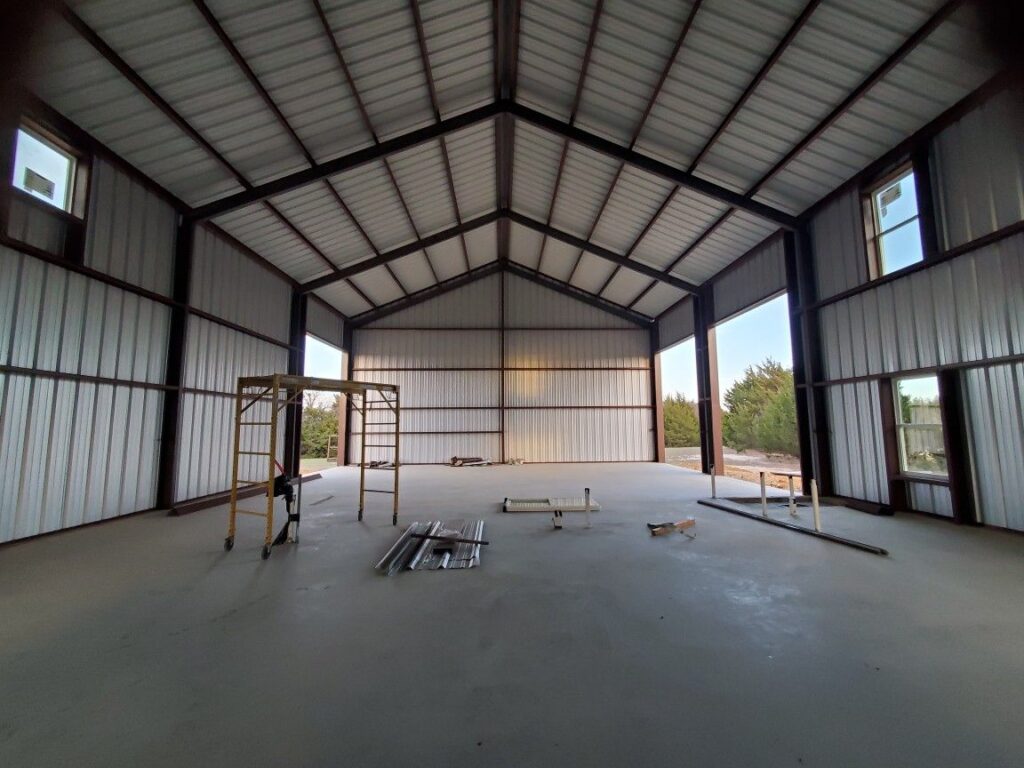
The general rule of thumb for many Australian residential zones is a minimum setback of 900mm (0.9 meters) from side and rear boundaries. This distance allows for maintenance access and prevents fire spread.
However, smaller sheds often have different rules. Many councils allow you to build closer—sometimes even right up to the fence (zero lot line)—provided the shed meets strict height and size limitations.
Common scenarios include:
- Sheds under 10 square meters: Often allowed closer to the boundary (sometimes 450mm or less) if they are not habitable.
- Zero boundary walls: Building directly on the line is possible in some states but usually requires a fire-rated wall and no windows facing the neighbor.
State-by-State Setback Regulations
While the National Construction Code provides a baseline, each state and territory has its own planning policies. Here is a breakdown of what to expect.
New South Wales
In NSW, many sheds fall under “Exempt Development” if they meet the State Environmental Planning Policy (SEPP).
- Distance: Generally, the shed must be at least 900mm from the boundary.
- Exceptions: If you are in a heritage conservation area or on bushfire-prone land, the rules become stricter. The shed usually cannot be in front of the building line (front yard).
Victoria
Victoria’s building regulations often allow construction on the boundary under specific conditions.
- Distance: You may be able to build on the boundary if the wall height is under 3.2 meters (average) and the length is limited (often 10 meters plus 25% of the remaining boundary length).
- Clearance: If not on the boundary, you generally need to be at least 1 meter away.
Queensland
Queensland regulations can vary significantly between councils like Brisbane, Gold Coast, and Sunshine Coast.
- Distance: The standard setback is often 1.5 meters from side and rear boundaries for larger structures.
- Small Sheds: For small garden sheds (e.g., under 10 sqm and 2.4m high), some councils may tolerate closer placement, but formally, the Queensland Development Code (QDC) usually applies.
Western Australia
WA operates under the Residential Design Codes.
- Distance: Setbacks depend on the length and height of the wall. For a wall up to 9 meters long and 2.4 meters high, a 1 meter setback is standard.
- Boundary Walls: Building on the boundary is possible but often requires neighbor consultation.
South Australia
- Distance: Generally 900mm from boundaries for complying development.
- Boundary Building: You can often build on the boundary for a maximum length of 8 meters, provided the wall is not higher than 3 meters.
Tasmania
- Distance: Usually 1.5 meters from boundaries.
- Exemptions: Smaller sheds (under 9-10 sqm) may be exempt from permits but should still generally respect the 900mm rule to avoid drainage issues onto neighboring land.
Australian Capital Territory
- Distance: Exempt sheds usually require a setback of 1.5 meters from side and rear boundaries if they are open-sided, or follow specific envelope controls for enclosed sheds.
- Placement: Sheds generally must be behind the building line.
Northern Territory
- Distance: Typically 1.5 meters from side and rear boundaries. In some zones, zero setback is permitted for non-habitable structures if fire separation is maintained.
When You Don’t Need Planning Approval
You can often skip the headache of a Development Application if your project qualifies as Exempt Development. To qualify, your shed generally must:
- Be a specific size: Usually under 10 to 20 square meters (varies by state).
- Meet height limits: Typically no taller than 2.4 to 3 meters.
- Handle water correctly: Roof water must be directed to a legal discharge point, not your neighbor’s yard.
- Be non-habitable: It cannot be used as a bedroom or living space.
- Respect heritage: Not interfere with heritage items or significant trees.
Building a Shed on Your Boundary: Rules & Conditions
Building a shed right on the boundary line (0mm setback) is popular for maximizing space, but it comes with strict conditions.
- Fire Safety: If a shed is closer than 900mm to a boundary, the Building Code of Australia often requires the external wall to be non-combustible (fire-rated).
- No Windows: You typically cannot have openable windows or doors facing the boundary if the wall is close to the fence.
- Maintenance: You must ensure you can maintain the shed wall without trespassing on your neighbor’s property.
- Termite Protection: Concrete slabs built to the boundary must have appropriate termite management systems.
Key Tips Before Installing Your Shed
Before you buy, consider these practical steps to avoid future headaches.
- Check Your Local Council Maps
A homeowner in Sydney might be dealing with “bushfire prone” zones that a homeowner in Melbourne is not. Always check your property’s zoning certificate. - Talk to Your Neighbors
Even if you don’t legally need their permission for an exempt shed, telling them your plans is courteous. It prevents disputes later, especially regarding fence maintenance or views. - Contact the Planning Department
If you are unsure, a quick call to the council duty planner can clarify the “minimum shed setback” for your specific address.
FAQ: Shed Setbacks Explained
Do I need planning approval to build a shed near my fence in Australia?
Not always. If your shed meets the “Exempt Development” criteria for your state (usually small size, low height, and correct setbacks), you may not need approval. However, large sheds or those built very close to boundaries often require a permit.
How far should a garden shed be from the property boundary?
The safest standard distance is 900mm. This clears most fire safety and access rules. Some states allow 0mm (on the boundary) or require 1.5m depending on the height of the shed.
Can I build a shed on the boundary line?
Yes, in many jurisdictions, provided the wall is fire-rated, has no windows facing the neighbor, and meets height limits (usually under 3m). You must ensure roof water does not flow into the neighbor’s property.
What if my neighbor objects?
If your shed is “Exempt Development,” a neighbor generally cannot stop you. However, if you require a Development Application (DA), the council will notify neighbors, and they can lodge a formal objection.
Are there height limits near fences?
Yes. Sheds built near fences are usually restricted to a height of 2.4m to 3m to prevent overshadowing your neighbor’s yard.
Find the Right Shed for Your Space
Navigating council shed rules is easier when you have high-quality options that fit your specific dimensions. Whether you need a compact storage unit that sits flush against a wall or a large workshop that requires specific setbacks, getting the right advice is key.
For tailored shed options, sizing advice, and industry-leading quality, we suggest you explore Professional Choice Sheds. They can help you find a structure that fits perfectly within your boundaries.