You’ve picked out the perfect shed design. You know exactly where it’s going in the backyard, and you can already picture your tools organized or your new workshop set up. But before you can start building, you face one critical decision that will determine the lifespan of your investment: the foundation.
Choosing the right base isn’t just about having a flat surface. It’s about protecting your shed from rot, preventing it from sinking into the mud, and ensuring the doors open and close smoothly for years to come. The two most popular contenders in the ring are the robust concrete slab and the versatile gravel base.
Ready to get started? Contact Professional Choice Sheds today for expert advice on your shed project.
Understanding Your Contenders
Before we compare them, let’s clarify exactly what we’re talking about.
Concrete Slab Foundation
Think of this as the “permanent” option. A concrete slab is a solid, poured layer of concrete, typically reinforced with steel mesh or rebar. It creates an impenetrable, flat floor that is often level with or slightly above the ground. It’s the same type of foundation used for most modern homes and garages.
Gravel Base (Crushed Stone) Foundation
This is a “drainage-first” option. A gravel base consists of a perimeter frame (usually treated timber) filled with crushed stone or gravel. The shed sits on top of this aggregate bed or on skids resting on the stone. It’s designed to be stable but permeable, allowing water to flow through it rather than pooling around your shed.
The Great Debate: Concrete Slab vs Gravel
When weighing up shed foundation options, you need to look at how they perform across six key categories.
1. Cost (Materials and Labor)
Budget is often the deciding factor for many homeowners.
- Gravel Base: This is generally the more affordable option. Materials (crushed stone, landscape fabric, timber) are cheaper than concrete. If you are handy, you can often install a gravel pad yourself, saving significantly on labor costs.
- Concrete Slab: Concrete is expensive. You need to pay for the concrete itself, the reinforcement steel, and usually a professional crew to pour and finish it. Concrete requires specialized skills to get right; a bad pour is very costly to fix. Expect to pay significantly more for a slab than a gravel pad.
Winner: Gravel Base
2. Durability and Lifespan
How long do you want this foundation to last?
- Gravel Base: A well-built gravel pad is very durable and can last for decades. However, the timber perimeter may eventually rot (though pressure-treated wood mitigates this), and the gravel might shift slightly over time, requiring a top-up.
- Concrete Slab: Concrete is the king of longevity. Once cured, a concrete slab is essentially permanent. It won’t rot, it won’t shift (if the sub-base was prepped correctly), and it is impervious to pests.
Winner: Concrete Slab
3. Ease and Speed of Installation
If you are in a rush to get your shed up, this matters.
- Gravel Base: You can install a gravel pad in a single afternoon. It requires digging out sod, laying fabric, and spreading stone. There is no “curing” time; you can build on it immediately.
- Concrete Slab: This is a multi-day project. You need to excavate, build forms, pour the concrete, and then wait for it to cure. You typically need to wait 7 days for it to be strong enough to build on, and up to 28 days for full cure.
Winner: Gravel Base
4. Drainage and Moisture Control
Water is the enemy of any garden structure.
- Gravel Base: This system excels at drainage. Water flows right through the crushed stone and into the ground, keeping the underside of your shed dry. It reduces splash-back (rain hitting the ground and splashing mud onto your shed walls), which is a major cause of rot.
- Concrete Slab: While concrete is solid, it can suffer from “splash-back.” Unless the slab is perfectly sloped or raised high enough, water can pool at the edges. Also, concrete is porous and can wick moisture up from the ground unless a vapor barrier is installed underneath.
Winner: Gravel Base (for wood-floor sheds)
5. Load-Bearing Capacity
What are you putting inside the shed?
- Gravel Base: Excellent for standard storage—lawnmowers, garden tools, bikes, and boxes. It supports the weight of the shed evenly.
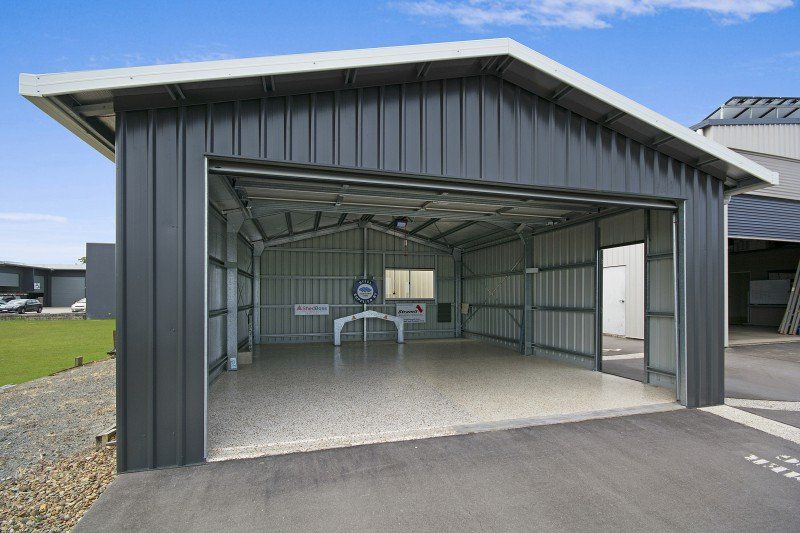
- Concrete Slab: Essential for heavy-duty use. If you plan to park a car, a tractor, or install heavy workshop machinery like a lathe or lift, you need the rigid strength of concrete.
Winner: Concrete Slab
6. Maintenance Needs
Do you want to set it and forget it?
- Gravel Base: Low maintenance, but not zero. Weeds might eventually creep in, or you might need to rake the gravel back into place if it migrates.
- Concrete Slab: virtually zero maintenance. You might need to seal it every few years to prevent staining, but structurally, it takes care of itself.
Winner: Concrete Slab
Which Foundation Should You Choose?
There is no single “best” option—only the best option for your specific project. Here is how to decide.
Choose a Gravel Base If:
- Your shed has a pre-built wooden floor. Gravel keeps the timber dry and prevents rot.
- You are installing a small to medium-sized shed. For standard 3x3m garden sheds, gravel is perfectly adequate.
- The ground is relatively flat. While you can level a slope with gravel, it’s easier on flat ground.
- Budget is a priority. You want a solid base without the high price tag.
Real-World Scenario: Sarah wants a 3x3m garden shed to store her potting mix, lawnmower, and kids’ bikes. Her backyard drains well. A gravel base is perfect for her—it’s cost-effective, installs in a day, and keeps her wooden shed floor dry.
Choose a Concrete Slab If:
- You are building a garage or large workshop. Structural integrity is key for large spans.
- You need to store heavy equipment. Tractors, cars, or heavy machinery require a rigid floor.
- You want a finished floor inside. A concrete slab serves as both the foundation and the floor, which is easier to sweep and clean than a wooden floor.
- The shed is very close to ground level. Concrete offers better protection against ground moisture for metal sheds without floors.
Real-World Scenario: Mike is building a large 6x6m workshop where he plans to restore a vintage car. He needs to use a floor jack and jack stands. A gravel base would be dangerous and unstable for lifting a car. Mike needs a reinforced concrete slab.
Making the Final Call
The battle of “concrete slab vs gravel” ultimately comes down to the purpose of your shed.
If you are looking for a cost-effective, drainage-friendly solution for a standard garden shed with a floor, gravel is often the superior choice. It saves you money and protects your timber from rot. However, if you are building a heavy-duty workshop, a garage, or a structure that requires a permanent, rigid floor, nothing beats the strength of concrete.
At Professional Choice Sheds, we know that a great shed starts from the ground up. Whether you need advice on site preparation or a quote for a shed designed to last a lifetime, we are here to help.